Community gardens
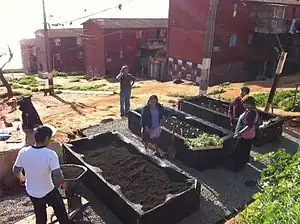
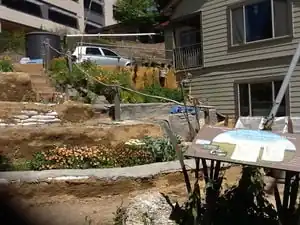
Community gardens are shared spaces where people come together to grow plants, including fruits, vegetables, herbs, and flowers. These gardens are often located in urban or suburban areas and are managed by individuals or groups. They provide a range of benefits, from increasing access to fresh produce to fostering social connections among participants.
As we teach ourselves and each other how to grow food, we build community and resilience, and eat better.
Sometimes, some gardeners specialize in growing the plants that they know well, and trade with other members. This is especially practical where people from different ethnic groups share a garden, as they often have completely different skills and knowledge.[1] In this way diversity is valued as an asset and bonds of social capital are created within the local community.
Community gardens are especially useful for apartment dwellers, and others without much of their own space to grow food.
For the "how to", see How to start a community garden.
Benefits of Community Gardens
- Food Access: These gardens help people grow their own food, which is especially important in areas where fresh produce is expensive or hard to find.
- Health Improvements: Gardening promotes physical activity and mental well-being, reducing stress and improving overall health.
- Environmental Impact: Community gardens often use sustainable practices, such as composting and water conservation, which benefit the local environment.
Starting a Community Garden
- Find a Location: Look for vacant lots, unused land, or spaces offered by local governments or organizations.
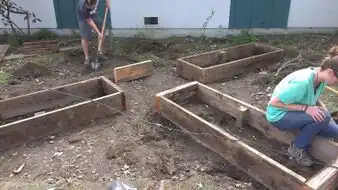
- Organize Participants: Form a group of interested people to share responsibilities like planting, watering, and maintaining the space.
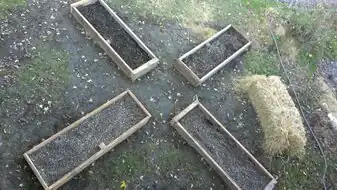
- Plan the Garden: Decide what to grow, considering the local climate and soil conditions.
- Maintain the Space: Use compost to improve soil health, water plants regularly, and rotate crops to keep the garden productive.
Growing and sharing seed
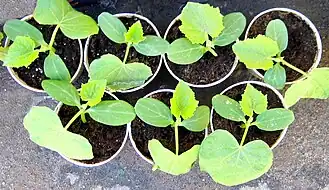
Members of each community can help each other out by letting their plants produce viable (ripened) seed of different plants and then sharing this seed. Another possibility is sharing small plants or even attaining small plants from plant nurseries supported by the community.
References
There are a growing number in Sydney: www.CityofSydney.nsw.gov.au