Georgia community action
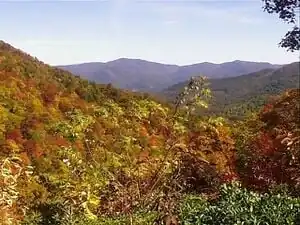
The aim of this page is to recognise, celebrate and encourage the self-empowerment of community agency networks (CANs) and community groups' activism for climate, environment and many other sustainability topics across Georgia.
News
 10m trees to be planted in US to replace ones destroyed by hurricanes, theguardian.com (Dec 31, 2024)
 - Food forests are bringing shade and sustenance to US cities, one parcel of land at a time, The Conversation (Apr 04, 2023)
Networks and sustainability initiatives

The Atlanta Beltline is 22-mile long multi-use corridor on a former railway corridor which encircles the core of Atlanta, Georgia. The Atlanta Beltline is designed to reconnect neighborhoods and communities historically divided and marginalized by infrastructure, improve transportation, add green space, promote redevelopment, create and preserve affordable housing, and showcase arts and culture. The project is in varying stages of development, with several mainline and spur trails complete. Since the passage of the More MARTA sales tax in 2016, construction of the light rail streetcar system is overseen by MARTA in close partnership with Atlanta Beltline, Inc.
The Beltline will be connected to MARTA's first bus rapid transit (BRT) line. The line is currently under construction and is scheduled to be completed in 2025 with revenue service beginning in late 2025. The 5-mile line will run from downtown Atlanta, through Summerhill, and end at the Beltline. The BRT line named the "MARTA Rapid Summerhill", will utilize new 60-foot articulated electric buses.
- Atlanta BeltLine beltline.org, Where Atlanta Comes Together
Food activism
- Patchwork City Farms, introduces farming to urban areas.
Social inclusion
Peachtree+ Pine Works, Metro Atlanta Task Force for the Homeless
Climate change
Climate change in Georgia encompasses the effects of climate change, attributed to man-made increases in atmospheric carbon dioxide, in the U.S. state of Georgia.
Studies show that Georgia is among a string of "Deep South" states that will experience the worst effects of climate change, with effects including "more severe floods and drought", and higher water levels "eroding beaches, submerging low lands, and exacerbating coastal flooding."
In coming decades, climate change will cause higher temperatures, and more severe flooding and droughts in the state, according to a 2016 pamphlet published by the United States Environmental Protection Agency. The temperature changes will increase the risk of heat stroke and other heat-related illnesses.
Sustainable transport activism
Cycling activism
- Atlanta Bicycle Coalition
- Macon Bike Share
- Macon Connects
- Wikipedia: Bike paths in Georgia (U.S. state) (category)
Biodiversity
Four of Georgia's protected areas are part of the Carolinian-South Atlantic Biosphere Reserve. They are:
- Blackbeard Island National Wildlife Refuge and Wolf Island National Wildlife Refuge
- Cumberland Island National Seashore
- Gray's Reef National Marine Sanctuary
- Little St. Simon's Island
Open spaces
The protected areas of Georgia cover almost one million acres (4,000 km2) of the state. These areas are managed by different federal and state level authorities and receive varying levels of protection. Some areas are managed as wilderness while others are operated with acceptable commercial exploitation. On the Federal level, Georgia contains 1 Biosphere Reserve, 15 National Park Service Managed Sites, 1 National Forest and 8 Wildlife Refuges. Georgia is home to 63 state parks, 48 of which are state parks and 15 that are National Historic Sites, and many state wildlife preserves, under the supervision of the Georgia Department of Parks and Recreation, a division of the Georgia Department of Natural Resources.
Trees, woodland and forest
Atlanta has a reputation as the "city in a forest" due to its abundance of trees, unique among major cities. The city's main street is named after a tree, and beyond the Downtown, Midtown, and Buckhead business districts, the skyline gives way to a dense canopy of woods that spreads into the suburbs. The nickname is factually accurate, as the city's tree coverage percentage is at 36%, the highest out of all major American cities, and above the national average of 27%.
Citizens data initiative
News archive
2013-2017
- Pop-Up Bike Network Leads to Permanent Change, Jul 10, 2017...nextcity.org
- Giant City Cycling Pop-Up Offers Bike Lane Lessons, Dec 15, 2016...nextcity.org
- Atlanta wants to cover a major highway with a High Line-style garden, Sep 23, 2016...@FastCoDesign
- Homeless people in Atlanta plant organic garden, feed shelter residents, July 28, 2015...@HuffPostImpact
- Urban eco-repair in the Deep South, December 6, 2013...The Ecologist
About Georgia
Past events
- October 23, 2016, Atlanta Streets Alive
- September 25, 2016, Atlanta Streets Alive
- June 12, 2016, Atlanta Streets Alive
- April 17, 2016, Atlanta Streets Alive
Georgia, officially the State of Georgia, is a state in the Southeastern United States. It borders Tennessee and North Carolina to the north, South Carolina and the Atlantic Ocean to the east, Florida to the south, and Alabama to the west. Of the 50 United States, Georgia is the 24th-largest by area and eighth most populous. According to the U.S. Census Bureau, its 2024 estimated population was 11,180,878. Atlanta, a global city, is both the state's capital and its largest city. The Atlanta metropolitan area, with a population greater than 6.3 million people in 2023, is the sixth most populous metropolitan area in the United States and contains about 57% of Georgia's entire population. Other major metropolitan areas in the state include Augusta, Savannah, Columbus, and Macon.
Georgia is defined by a diversity of landscapes, flora, and fauna. The state's northernmost regions include the Blue Ridge Mountains, part of the larger Appalachian Mountain system. The Piedmont plateau extends from the foothills of the Blue Ridge south to the Fall Line, an escarpment to the Coastal Plain defining the state's southern region. Georgia's highest point is Brasstown Bald at 4,784 feet (1,458 m) above sea level; the lowest is the Atlantic Ocean. With the exception of some high-altitude areas in the Blue Ridge, the entirety of the state has a humid subtropical climate. Of the states entirely east of the Mississippi River, Georgia is the largest in land area.