Ghana community action
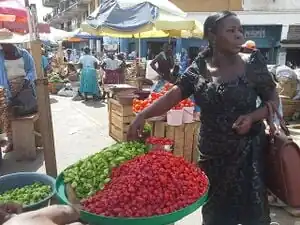
The aim of this page is to recognise, celebrate and encourage the self-empowerment of community agency networks (CANs) and community groups' activism for climate, environment and many other sustainability topics across Ghana.
News
 ‘Diversion’ trees to protect shea trees and their livelihoods planted by women in Ghana, news.mongabay.com (Mar 08, 2025)
 - What Ghana’s small businesses can teach the world about becoming more sustainable, theconversation.com (Jan 06, 2025)
- Resilient farming in northern Ghana, Agroecology blueprint for other drought-prone regions across Africa, news.mongabay.com (Dec 05, 2024)
Video
Networks and sustainability initiatives
Climate action

Ghana signed the Paris Agreement on 22 April 2016 and ratified it on 21 September 2016. The first national climate change adaptation strategy in Ghana was developed to be implemented between 2010 and 2020. The Ministry of Environment Science, Technology and Innovation published a policy framework in 2013.
In 2015, Ghana developed a framework entitled "Ghana's Intended Nationally Determined Contribution" to outline a plan to reduce carbon emissions and to improve eternity of land use, transportation, and other economic and societal sectors. This plan, after the 2016 Paris Agreement signing, became the Nationally Determined Contribution (NDC). Ghana has pledged to adopt 34 strategies to reduce greenhouse gas emissions, with 9 being implemented independently and 25 dependent on external support. The goal is to cut emissions by 64 million metric tons of CO2 equivalent (MtCO2e) by 2030, compared to the total emissions expected between 2020 and 2030. Ghana has also committed to net zero by 2060.
Ghana is experiencing population growth, has a high poverty rate, and its economy is dependent on vulnerable industries like agriculture. Thus, it is a West African country with increased risk of climate vulnerability, including droughts and floods, hunger and disease, that increase human suffering, violence, displacement, and economic collapse in the region.
Ghanaian President Nana Akufo-Addo, the President of Ghana stated, "Our hope depends on the actions we take today." However, Ghana still needs to develop long-term contingency plans for climate change because decision-makers and local managers have an inadequate perception of the costs of dealing with such crises. A 2022 report by the World Bank report noted that Ghana has slowed progress in its economic development and has not fully converted its natural wealth into sufficient infrastructure, human, and institutional capital for sustained growth, but taking a climate resilient and low-carbon pathway could turn challenges into opportunities. With appropriate reforms and investments, it will be possible for Ghana to "deliver large economic and social benefits for its people".
Climate change in Ghana is having significant impacts on the people of Ghana. Increasing temperatures and changes in rainfall, extreme weather, drought, wild fires, floods and sea-level rise are expected to negatively affect the country's infrastructure, hydropower production, food security, and coastal and agricultural livelihoods such as farming and fisheries. Ghana's economy will be impacted by climate change, due to its dependence on climate-sensitive sectors such as agriculture, energy, and forestry.
Sustainable livelihood
Trees, woodland and forest
On 11 June 2021, Ghana inaugurated Green Ghana Day in an aim of planting 5 million trees in a concentrating effort to preserve the country's cover of rainforest to combat deforestation.
News archive
2010 SEED Award Winners...unep.org November 3, 2010
"The Shea Economic Empowerment Program (SEEP)". This fruitful partnership centred on a community-based cooperative and international NGOs seeks to improve the livelihoods of women Shea nut producers by offering training, greater ownership within the supply chain and access to improved technology.
"G-lish: Income Generation, Re-Generation, Next Generation". The aim of this remarkable initiative of local NGOs is to provide value-added income for rural communities by crafting baskets from recycled materials. In doing so, they preserve the age-old basket-weaving tradition and carry out extensive tree-planting operations.
"High-value Syrup from 'Prekese' Fruits for Community Livelihood Empowerment". Relying on local raw materials, the partners of this promising initiative strive to establish the sustainable cultivation and harvesting of Prekese fruits in rural communities, allowing income to be generated over the whole life cycle of the tree.
"Ghana Bamboo Bikes Initiative" is a youth-led, non-profit enterprise committed to the economic empowerment of youth by taking advantage of the abundant bamboo raw materials in Ghana to manufacture and assemble high-quality bamboo bikes - suitable for the road conditions and terrain in Ghana and affordable to the poor.
"DeCo! - Decentralized Composting for Sustainable Farming and Development". The composting firm DeCO! benefits local farmers by producing organic fertiliser in decentralised composting plants following a low-tech approach. By working with local NGOs, government and research institutes, DeCO! aims to inform and educate farmers about the advantages of sustainable soil management.
"Biofuel Production in Promoting Sustainable Land Management". A local NGO in partnership with national research institutions has established a model for rehabilitating degraded community lands, producing food crop and utilising renewable energy through the cultivation and processing of sunflower plants into oil and biodiesel. Their sustainable land management approach also includes bee-keeping.
About Ghana
Ghana, officially the Republic of Ghana, is a country in West Africa. It lies adjacent to the Gulf of Guinea and the Atlantic Ocean to the south, sharing a border with Ivory Coast in the west, Burkina Faso in the north, and Togo in the east. Ghana covers an area of 239,567 km2 (92,497 sq mi), spanning diverse ecologies, from coastal savannas to tropical rainforests. With nearly 35 million inhabitants, Ghana is the second-most populous country in West Africa. The capital and largest city is Accra; other significant cities include Tema, Kumasi, Sunyani, Wa, Cape Coast, Techiman, Tamale, and Sekondi-Takoradi. In 1957 Ghana became the first colony in Sub-Saharan Africa to achieve sovereignty, under the leadership of Kwame Nkrumah.