Mexico community action
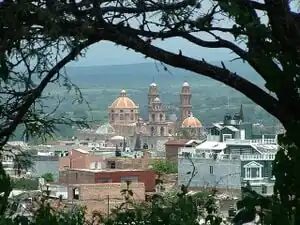
The aim of this page is to recognise, celebrate and encourage the self-empowerment of community agency networks (CANs) and community groups' activism for climate, environment and many other sustainability topics across Mexico.
News
 A new way of tackling homelessness is showing promise. Will it catch on?, positive.news (Dec 09, 2024)
 - Public luxury for the everyday citizens of Mexico City—with “100 Utopias” being built by new Mayor Clara Brugada, Daily Alternative (Jul 06, 2024) — "brilliant example of collective amenity and a public infrastructure of care", David Madden
- Fewer wildfires, great biodiversity: what is the secret to the success of Mexico’s forests?, theguardian.com (May 01, 2024) — More than half of the country’s forestry is in community and Indigenous hands – and from CO2 absorption to reducing poverty the results are impressive
- The dream to restore a special forest taking root in the high Andes, news.mongabay.com (Feb 14, 2025)
- Latin America is moving fast to protect democracy from excesses of big tech, theconversation.com (Feb 11, 2025)
- Study shows large social disparities in neighborhood flooding within Latin American cities, nature.com (Feb 10, 2025) — Policymakers must prioritize flood adaptation and recovery efforts in neighborhoods with lower socioeconomic status
- ‘Global weirding’: climate whiplash hitting world’s biggest cities, study reveals, theguardian.com (Mar 12, 2025)
- Only seven countries worldwide meet WHO dirty air guidelines, study shows, theguardian.com (Mar 11, 2025) — Governments could clean their air with policies such as funding renewable energy projects and public transport; building infrastructure to encourage walking and cycling; and banning people from burning farm waste.
- Many cities are banning ads for airlines, SUVs and fossil fuels – and yours could be next, theconversation.com (Mar 10, 2025)
Video
Networks and sustainability initiatives
- Neighbourhood initiatives across Mexico City
Ecovillages
- Las Cañadas Bosque de Niebla, on ecovillage.org, is a centre for agro-ecology and permaculture, situated in one of the last remaining islands of the Bosque de Niebla- the forest of mist-, in Mexico's central Veracruz region. Here, permaculture is used as a design tool with the aim of learning how to implement and share a sustainable way of living. "We are continuously developing creative solutions to solve both social and environmental problems that persist in this era of accelerated climate change." added 16:34, 2 May 2021 (UTC)
Community involvement
- Zapatistas: Lessons in community self-organisation in Mexico, Jun 25,2020...opendemocracy.net
- Cherán. 5 years of self-government in an indigenous community in Mexico, Dec 2, 2016...opendemocracy.net
The town of Cherán in Mexico saw armed citizens kick out the corrupt police, drug cartels, and mayor in 2011. Since then they have adopted a system of popular assemblies to govern the town, which is somewhat independent of the central government.
Food activism


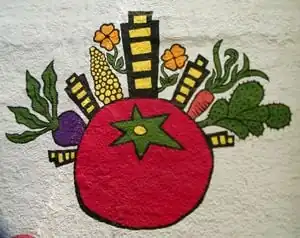
Sembradores Urbanos is a nonprofit urban agriculture demonstration center and outreach group in Mexico City started by three women living in Mexico. There vision is to transform urban soil into green, productive, and sustainable spaces. They opened the The Center for Urban Agriculture Romita, one of the first urban agricultural community spaces in Mexico. The center demonstrates a variety of urban agriculture and organic gardening techniques as well as serving as a space for workshops and courses. Sembradores Urbanos helps give talks at schools and businesses, puts on community movie nights, and helped start the Barter Exchange Merkado de Trueke in Plaza Romita. They also help install gardens in homes and apartments, hospitals, and juvenile detention centers with local volunteers.


Via Organica helping local vendors and farmers thrive
Via Organica, a regenerative farm in San Miguel de Allende, Mexico, is more than just a place that grows and sells fresh, organic produce to the local community. Rosana Álvarez, the farm's founder, also runs an educational center, restaurant, and store. By centralizing these operations, Álvarez is seeking to improve the livelihoods for local farmers and vendors.
Álvarez points to the example of a vendor who used to wake up at 4:30 a.m. every morning, take a long bus ride into the city, and walk from house to house selling tortillas. She would often return home at 7-8 p.m. at night, having sold only a few hundred pesos' worth of tortillas — making roughly $10-$20 for a full day's work. But now, Álvarez says, the vendor needs to travel to San Miguel just once per week to deliver tortillas in bulk to Via Organica. And she receives payment up front, Álvarez says. For Álvarez, this model represents a push to better the lives of local food producers and incentivize sustainable agricultural practices.
"I talk to people who take a bus, another bus to make two hundred pesos a day. Via Organica has changed that. People are making 10,000 pesos a week," she says. The extra income improves quality of life for vendors and allows them to spend more time with their families.
Álvarez founded Via Organica in 2009 after learning about organic farming from representatives at the Organic Consumers Association, a U.S.-based advocacy group. She says she was amazed by what she learned about the power of food, and with the help of the association, the farm was born. Almost a decade later, Via Organica now offers more than 2,000 organic and sustainable products in its store and serves hearty and healthy Mexican delicacies in its restaurant.
Álvarez says the organization also hold free workshops, classes, and internships, and helps organize a farmers' market in San Miguel. Every week, locals gather in Via Organica for workshops on healthy eating, composting, and other lessons. At the farm outside of the city, local schoolchildren learn about how to harvest and the different crops Via Organica grows. "Our way of eating has changed," Álvarez says. "Things are getting out of hand. So we are working to return to clean water and clean food. We are educating children."
Since the North American Free Trade Agreement went into effect in 1994, the Mexican food system has been destabilized, with processed products imported from the U.S. disrupting small farms. But despite the uphill battle, Álvarez passionately encourages her producers to hold on to their land and their traditions. "I tell my farmers, 'This land is precious,'" she says. "This land without pesticides, they have to hold on to it."
Sustainable farming, especially community-focused projects like Álvarez's, relies on the universal language of food to reshape the way people see their role as stewards of the earth. But it also serves a simpler but equally vital purpose: demystifying agriculture and empowering people with the knowledge of where their food comes from. "We deserve to know what we are eating," Álvarez says...By Casey OBrien, January 30, 2019 on Shareable
Community energy

Renewable energy in Mexico contributes to 26 percent of electricity generation in Mexico. As of 2009, electricity generation from renewable energy comes from biomass, hydro power, geothermal, solar power and wind. There is a long term effort established to increase the use of renewable energy sources. The amount of geothermal energy used and harvested, places Mexico as number four in the world.
As the importance of clean sustainable energy becomes more prevalent, the country and government officials continue to invest in research and innovations to continue to allow Mexico to be a leading example of renewable energy. Predictions based on current energy standings lead the country to anticipate by 2035, the 26 percent renewable energy in Mexico will rise to 35 percent.
Not only will this prove a more sustainable future it also increases jobs in rural areas. Jobs increased by 14 percent within the last 8 years in the renewable energy sector. With the objection to create more in-home jobs for residents of Mexico, an increase in sustainable energy, results in lower demand for conventional fuels such as fuel oil, petrol gas, coal and natural gas. With lower demand for these fuels, mainly gasoline and diesel and on the rise jet fuel, this will result in a lower need for imports. With relying on fewer imports, national security is higher.
Solar power in Mexico has the potential to produce vast amounts of energy. 70% of the country has an insolation of greater than 4.5 kWh/m2/day. Using 15% efficient photovoltaics, a square 25 km (16 mi) on each side in the state of Chihuahua or the Sonoran Desert (0.01% of Mexico) could supply all of Mexico's electricity.
Currently, 98% of all distributed generation can be attributed to solar PV panels installed on rooftops or small businesses. This installed capacity has greatly increased from 3 kW in 2007 to 247.6 MW by the end of 2016. According to the Mexican Ministry of Energy (SENER) if this trend continues till 2018 the total installed capacity will surpass 527 MW, this is the goal set by the Mexico's Special Program for Energy Transition or PETE (Programa Especial de la Transición Energética)
Mexico is rapidly growing its production of wind power. In 2016, its installed capacity had reached 3,527 MW, increasing to 8,128 MW in 2020.
In 2008, there were three wind farms in the country. The Eurus Wind Farm was the largest wind farm in Latin America. 18 of 27 wind farms construction projects were based in La Ventosa in the Isthmus of Tehuantepec in Oaxaca. According to the Mexican Wind Energy Association, Mexico was predicted to progress to rank twentieth worldwide in wind capacity by the end of 2012, and to produce four percent of the country's total electricity production. It also projected that the nation would have 12 GW (16,000,000 hp) of wind generation capacity by 2020, and would be able to provide fifteen percent of Mexico's production. Brian Gardner, Economist Intelligence Unit's energy analyst, said, "With strong wind through the south, consistent sunlight in the north and a stable market, Mexico is well positioned for continued renewables growth". Wind power is in partial competition with Solar power in Mexico.
Climate action
Climate change in Mexico is causing widespread, possibly irreversible impacts including rising temperatures, altered precipitation patterns, drought, intensified hurricanes, and sea-level rise in coastal regions. These changes pose threats to water resources and agriculture, with rural communities and smallholder farmers relying on rain-fed agriculture being particularly vulnerable, and affecting crops including maize and coffee, contributing to economic insecurity. Climate change is impacting Mexican's health and exacerbating human migration. Climate change is increasing extinction risk for Mexico's biodiversity by as much as ten times for endemic species.
In 2012, Mexico became the first major oil-producing emerging economy to enact climate legislation. Since then, the country has significantly increased its renewable electricity generation from wind and solar sources, however it is still dependent on fossil fuels for the majority of its energy. In 2023 Mexico was in the top 15 highest greenhouse gas emitters, contributing over 5 million tonnes, or 1.4% of the global total.
Mexico has committed to reducing greenhouse gas emissions by 35% by 2030, with an increased target of 40% conditional upon external support. The country also aims to cut black carbon emissions by 51% unconditionally and 70% with additional support by 2030 and has committed to net zero by 2050. Additionally, their updated National Climate Change Strategy emphasizes adaptation and mitigation measures across sectors such as energy, agriculture, water resources, forestry, and coastal zones. However, Climate Action Tracker's 2022 assessment indicated that Mexico's climate policies have regressed, with a renewed emphasis on fossil fuels and the dismantling of climate-related institutions, potentially hindering progress toward emission reduction targets. Mexico's current president, Claudia Sheinbaum, has made new promises to tackle climate change since taking office in October 2024.
Greenhouse gas emissions
According to Mexico's Third National Communication to the UNFCCC, the country emitted 643 million tons of carbon dioxide equivalent (Mt CO2e) in 2002, of which almost 400 Mt CO2e resulted from the combustion of fossil fuels (over 60 percent of total emissions). The sources of Mexico's GHG emissions are energy generation (24%), transport (18%), forests and land-use change (14%), waste management (10%), manufacturing and construction (8%), industrial processes (8%), agriculture (7%), fugitive emissions (6%), and other uses (5%).
Climate change and migration
There is evidence to suggest that declining agricultural conditions from climate change in Mexico directly relates to migration to the United States. For example, a direct relationship between declining crop yields in Mexico and migration was found. Declines in agricultural productivity due to climate change might cause 1.4 to 6.7 million adult Mexicans to emigrate by the year 2080.
Ethical consumerism
Ecotourism: Sierra Gorda
Sustainable transport activism
More video: BRT Mexico City - English on youtube, 2007
- Fewer spaces, more city: Parking in Mexico City (2014), mexico.itdp.org
- Colectivo camina, haz ciudad (Mexico City)
- Towards Carfree Cities X: What happened in Guadalajara from 3 to 10 September 2011? worldstreets.wordpress.com
Cycling activism
Ecobici is the bicycle sharing system launched in February 2010 by the government of Mexico City. Initially launched with 85 docking stations and 1,000 distinctive red and white liveried bicycles, the network then expanded by September 2013 to be at 276 stations with 4,000 bicycles, and as of April 2015, now has 444 stations with 6,000 bicycles.
Ecological restoration
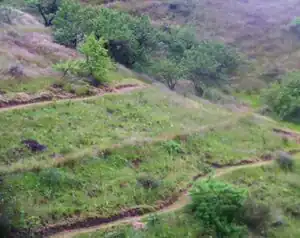
This page is the beginnings of a portal for Mexico community action in response to Ecological emergency.
About Mexico
Mexico, officially the United Mexican States, is a country in North America. It borders the United States to the north, and Guatemala and Belize to the southeast; while having maritime boundaries with the Pacific Ocean to the west, the Caribbean Sea to the southeast, and the Gulf of Mexico to the east. Mexico covers 1,972,550 km2 (761,610 sq mi), and is the thirteenth-largest country in the world by land area. With a population exceeding 130 million, Mexico is the tenth-most populous country in the world and is home to the largest number of native Spanish speakers. Mexico City is the capital and largest city, which ranks among the most populous metropolitan areas in the world. It is also the northwesternmost country in Latin America.
Human presence in Mexico dates back to at least 8,000 BC. Mesoamerica, considered a cradle of civilization, was home to numerous advanced societies, including the Olmecs, Maya, Zapotecs, Teotihuacan civilization, and Purépecha. By the late 15th century, the Aztec Empire dominated much of central Mexico before falling to Spanish colonial forces in 1521. The colony of New Spain was established, with its capital at Mexico City, built on the ruins of the Aztec capital, Tenochtitlan. Under Spanish rule, Mexico became a major center of the transatlantic economy, fueled by silver mining and the forced labor of Indigenous peoples and enslaved Africans. The 1810–1821 Mexican War of Independence ended Spanish rule and led to the creation of the First Mexican Empire, which quickly collapsed into the short-lived First Mexican Republic. It lost nearly half its territory to the Mexican–American War in 1848. Liberal reforms set in the Constitution of 1857 led to civil war and French intervention, culminating in the establishment of the Second Mexican Empire under Emperor Maximilian I, who was overthrown by Republican forces led by Benito Juárez. The late 19th century saw the long dictatorship of Porfirio Díaz, whose modernization policies came at the cost of severe social inequality. The 1910–1920 Mexican Revolution led to the overthrow of Díaz and the adoption of the 1917 Constitution. Mexico experienced rapid industrialization and economic growth in the 1940s–1970s, amidst electoral fraud, political repression, and economic crises. Unrest included the Tlatelolco massacre of 1968 and the Zapatista uprising in 1994. The late 20th century saw a shift towards neoliberalism, marked by the signing of the North American Free Trade Agreement (NAFTA) in 1994.
Near you
Maps