Soil erosion
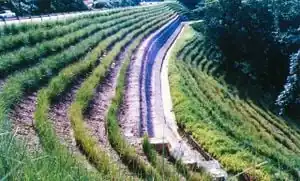
Vetiver
planted in rows for erosion control.
Soil erosion is the displacement of the upper layer of soil, which reduces soil quality and affects plant growth. It's caused by natural processes like wind and water, and human activities like deforestation and agriculture.
Causes of Soil Erosion
- Water Erosion: Rainfall and surface runoff remove soil particles.
- Wind Erosion: Strong winds lift and carry soil away.
- Human Activities: Deforestation, overgrazing, and poor farming practices.
Effects of Soil Erosion
- Loss of Topsoil: Reduces soil fertility and crop yields.
- Water Pollution: Eroded soil can carry pesticides and fertilizers into waterways.
- Sedimentation: Can clog rivers and streams, affecting aquatic life.
Prevention and Control
- Vegetation Cover: Planting trees and grass to hold soil in place.
- Terracing: Creating terraces on slopes to slow down water flow.
- Conservation Tillage: Reducing tillage to maintain soil structure.
Case Studies
- Terracing in the Philippines: Farmers use terraces to prevent erosion on steep slopes. Learn more about Terracing in the Philippines.
- Cover Crops in the USA: Farmers plant cover crops to protect soil during off-seasons. Explore more on Cover Crops in the USA.
Additional Resources
- FAO Soil Erosion: Extensive information on soil erosion and control methods. Visit the FAO Soil Erosion Page.
- USDA on Soil Health: The United States Department of Agriculture offers resources on soil conservation practices. Check out USDA Soil Health.
Soil erosion poses a significant threat to agriculture and the environment. By understanding its causes and implementing effective control measures, we can mitigate its impacts.
See also
- Soil improvement and fertilisation
- Coastal erosion
External links
- Wikipedia:Erosion
- SOIL EROSION - EAGROVISION
This article is issued from Appropedia. The text is licensed under Creative Commons - Attribution - Sharealike. Additional terms may apply for the media files.