To Catch the Sun
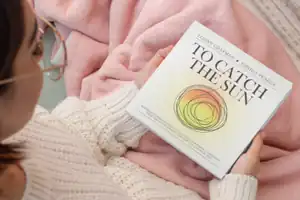
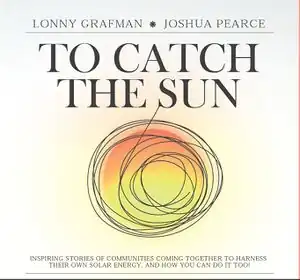
To Catch the Sun by Lonny Grafman and Joshua Pearce is part of a series on people coming together to use their own resources and creativity to meet their needs with instructions on how you can do it too.
Sign up to get a free copy of the ebook at http://tocatchthesun.com/ or purchase a softback at a local bookstore or on Amazon.
Brought to you by backers on Kickstarter. 440 backers brought in over $20,000 to help make this book a beautiful addition to your library.
ISBN 978-1-947112-62-9 Library of Congress Control Number: 2021947789
In Spanish: https://tocatchthesun.com/?lang=es
In French: https://tocatchthesun.com/?lang=fr
Who the Book is for
The sun lands on us with incredible power. Yet we often find ourselves without sufficient power for our needs. This book is for anyone looking for inspiration and capability with small-scale solar power in order to meet their needs. We focus on small-scale, but the learnings in this book can be applied to large-scale micro-grids or even larger solar farms. That said, our focus will be mostly on off-grid systems that are 1 kW or smaller. Some specific examples include:
- A small home in a financially rich country
- A few homes in a financially poor country
- School rooms and community spaces
- Isolated loads like electric gates, pumps, and telecommunications equipment
- A tiny home or van life
- Glamping and backpacking equipment
- Emergency supply, e.g., powering an oxygen machine during a power outage
- Zombie-apocalypse equipment
- Laptop and cellphone chargers
- Solar entrepreneurship devices
To Catch the Sun emphasizes adaptability and iteration to meet your needs. It is one of the few photovoltaic books to cover very small systems with and without batteries, in a global context, for everyday designers everywhere.
This book can also be utilized in curriculum so that students have context for learning about electricity, power and energy, photovoltaics, spreadsheets, and basic math concepts.
There are many resources and professionals out there to help in building larger systems. This book will mostly focus on the small-scale, distributed, resilient systems that you can build yourself. In addition, this book is meant to be a deep knowledge starting point. Ultimately, you might find a video online that is exactly what you want to build. This book can help you determine what to build, what to avoid, and assess if the video is accurate. Building a deeper and broader understanding will help you leverage the most current research, resources, blogs, YouTube videos, etc., so that you can adapt to your, and your community’s, specific needs.
This book is for anyone looking to build solar projects and knowledge:
- Students and teachers. Especially high school and undergraduate university levels in science, math, engineering, environmental and social justice, and technical fields.
- Community organizers and builders looking to build solar projects.
- Entrepreneurs and inventors looking to build solar products.
- Families looking to learn together!
Videos
Problem Sets
Some problem sets which might contribute to your understanding of solar panels and therefore "To Catch the Sun"
Problem Set 1:
A 5 kW solar panel system is installed on a rooftop. Assuming an average of 1200 hours of sunlight per year, how much energy will the system produce annually? Calculate the annual energy production of a solar panel system.
Hint to answer: You might want to use this formula; Energy (kWh)=Power (kW)×Sunlight Hours (h)
Answer: The 5 kW solar panel system will produce 6000 kWh of energy annually, assuming 1200 hours of sunlight per year. Great job!
Problem Set 2:
Research a technology used to improve the efficiency of solar panels and explain how it impacts energy production costs. You can refer to "To Catch the Sun", or write answers on your own!!
Hint to answer: You might want to approach to this question considering these aspects; Identify the problems, research solutions and then explain the impact.
Answer: One solution to increase solar panel efficiency is the use of monocrystalline cells, which have a higher energy conversion rate and require less space. Another is solar tracking systems, which adjust panel angles to follow the sun, boosting energy output by up to 30% despite higher upfront costs. Additionally, anti-reflective coatings and automated cleaning systems improve absorption and maintain consistent performance by reducing light loss and dirt accumulation. Great job you did it!!
Guides
Check out our first 40W step by step guide at Step by step 40W solar manual.
Examples
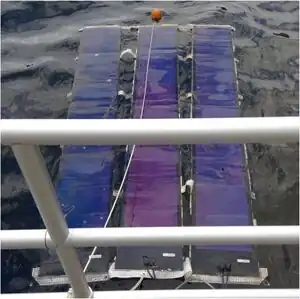
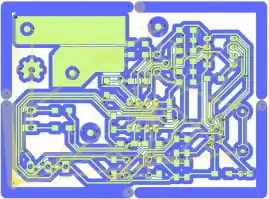
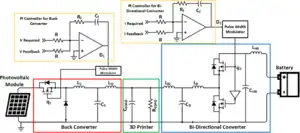
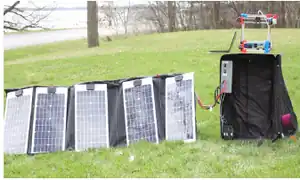
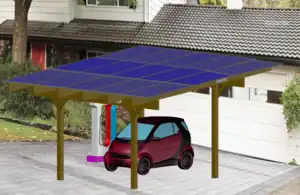
Solar PV Studies
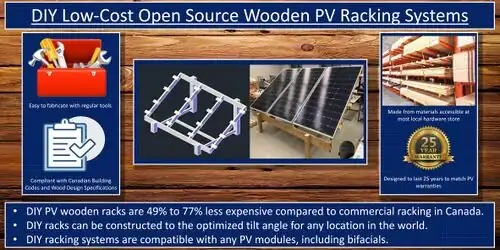
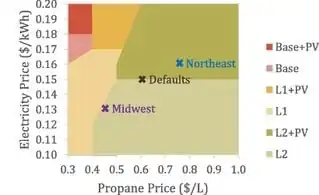


In the Media


 Forbes 170 Can Build-Your-Own Solar System Help The US Reach Biden's Climate Goals? , Bitcoin Ethereurum News 33k, Business Mayor, Green Reporter
 CTV'It's a solar-powered apartment': Western prof's book teaches DIY Solar Energy Project (3232)
 Open source solar power for anyone Opensource.com 14.3k
 Newsbreak 3.8k
 Digital Journal 14.2k


 Lab Roots How to Profit from Solar Power at Home 44.2k
 IHeartRadio AM800 47.9k
 Mirage News 87k
 Earth 911 94k


 Knjiga koja uči kako izgraditi vlastiti fotonaponski energetski sustav GreenHR (Crotian)
 Home Improvement and Repairs Sun Connect - East African News
 Free book teaches DIY for solar energy Western News












































































More Media
- “Catch the Sun” – New Book is “How To” for Community Solar Climate Denier Crock of the Week
- Ontario Farmer
- The Sun Times
- Norfolk News
- Age Dispatch
- The Expositor
- The Cochrane Times Post
- Crag and Canyon
- Miner and News
- Wiarton Echo
- The Post
- St Thomas Times Journal
- NorthBay Nugget
- Kingston Whig Standard
- The Sault Star
- The Intelligencer
- Times Advance
- The Signal Star
- The Observer
- County Weekly News
- Paris Star
- Record Gazette
- Drayton Valley Western Review
- Devon Dispatch
- Pincher Creek Echo
- Kingston This Week
- Mayerthorpe Freelancer
- High River Times
- Sault This Week
- Midnorth Monitor
- Chatham Kent This Week
- Shoreline Beacon
- Fort McMurray Today
- Kindcardine News
- The Stratford Beacon Herald
- The Whig Standard
- User Walls 185k
- Bestinau
- 11 open source ideas for being more eco-friendly in 2022
- DIY, Open Source, and Solar: Cal Poly Humboldt Students Harness the Power of the Sun EIN
Projects
Please share your projects with us. The best way is by creating a page here on Appropedia sharing your project with the world. Also, feel free to reach out to us on social media to share your stories, photos, or thoughts! Links listed below at #About the Authors.
Please share your projects with us. The best way is by creating a page here on Appropedia sharing your project with the world. Also, feel free to reach out to us on social media to share your stories, photos, or thoughts! Links listed below at #About the Authors.
Here are some projects that used this book (some of them when the book was still in its 1.5 year beta!):
- 215 Mahana solar window fan
- 215 Cassiopeia solar apocalypse computer
- 215 Emergency photovoltaic box
- 215 DIY solar power box fan air filter
- CCAT solar stereo system
- CCAT solar bug out box
- CCAT solar irrigation for food forest
- Potawot solar fans for greenhouse
- Taa-'at-dvn Chee-ne' Tetlh-tvm Food Forest Solar System
- 535 The Last Airsensor remote air quality monitoring station
About the Authors
Joshua Pearce
Lonny Grafman
More links
- Learn more at http://tocatchthesun.com.
- Sustainable World Radio Podcast
- To Catch the Sun Errata - To Catch the Sun/Errata