Trees, woodland and forest UK
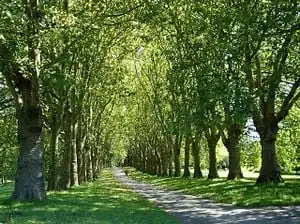
The aim of this page is to recognise, celebrate and encourage the self-empowerment of UK community agency networks (CANs) and community groups' activism concerning Trees, woodland and forest. Learn about how communities positively impact through innovations, different projects and collaborations.
News
 The UK must make big changes to its diets, farming and land use to hit net zero – official climate advisers, theconversation.com (Feb 26, 2025)
 - ‘Our community deserves beauty’: one man’s mission to green a UK tree desert, theguardian.com (Feb 20, 2025)
- Japan-style ‘tiny forests’ are taking root in British cities, theconversation.com (Oct 28, 2024)
Video
Events
 May 6 - 12, 2024 (Mon - Sun) — National Hedgerow Week, hedgelink.org.uk
- Nov 23 - Dec 1, 2024 (Sat - Sun) — National Tree Week, The Tree Council's annual tree celebration. People across the country planting thousands of trees to mark the start of the winter tree planting season. "Trees and hedgerows are some of the most powerful tools we have in the fight against climate change.", treecouncil.org.uk
Networks and support organisations
- Future Forests Network, not for profit Community Interest Company focused on improving the connection between volunteer tree planters, community event organisers and land owners.
- The Woodland Trust is the largest woodland conservation charity in the UK. It has over 500,000 supporters.
- The Trust has three key aims:
- protect ancient woodland which is rare, unique and irreplaceable
- restoration of damaged ancient woodland, bringing precious pieces of our natural history back to life
- plant native trees and woods with the aim of creating resilient landscapes for people and wildlife.
- Established in 1972, the Woodland Trust now has over 1,000 sites in its care covering over 29,000 hectares. Access to its woods is free...Press release, Oct 22, 2021, woodlandtrust.org.uk/press-centre, Landscape-scale conservation, woodlandtrust.org.uk
- Woodland Trust, Woodland Trust

The Tree Council was founded in 1974 in the United Kingdom, and became a registered charity in 1978. Its primary objective is to act as an umbrella organisation for local groups involved in the planting, care and conservation of trees throughout the United Kingdom, and followed the successful government-sponsored Plant A Tree In '73 campaign.
The charity is based at Canada Water, Surrey Quays, London. Its initiatives include:
- In 2002, selecting 50 Great British Trees to honour the Queen's Golden Jubilee of accession to the throne
- Supporting the UK government's Big Tree Plant campaign, which planted one million trees between 2011 and 2015
- Supporting the 2017 Charter for Trees, Woods and People
- Supporting the Queen's Green Canopy to mark her Platinum Jubilee in 2022
- Organising National Tree Week in November each year
- The Tree Council, link checked 16:58, 9 March 2022 (UTC)
- Trees and Design Action Group
- Hedgelink, sharing knowledge and ideas to encourage and inspire everyone to take action to manage, protect and conserve our hedgerows for the future.link checked 16:53, 9 March 2022 (UTC)
Community action projects
- community tree planting
- local rewilding opportunities
- help map the lost rainforests of Britain, see Maps
- Add a tree to the Ancient Tree Inventory, ati.woodlandtrust.org.uk, added 11:55, 5 October 2023 (UTC)
- Hedge laying and looking after hedges
Hedges and hedgelaying
A hedge or hedgerow is a line of closely spaced (3 feet or closer) shrubs and sometimes trees, planted and trained to form a barrier or to mark the boundary of an area, such as between neighbouring properties. Hedges that are used to separate a road from adjoining fields or one field from another, and are of sufficient age to incorporate larger trees, are known as hedgerows. Often they serve as windbreaks to improve conditions for the adjacent crops, as in bocage country. When clipped and maintained, hedges are also a simple form of topiary.
A hedge often operates as, and sometimes is called, a "live fence". This may either consist of individual fence posts connected with wire or other fencing material, or it may be in the form of densely planted hedges without interconnecting wire. This is common in tropical areas where low-income farmers can demarcate properties and reduce maintenance of fence posts that otherwise deteriorate rapidly. Many other benefits can be obtained depending on the species chosen.
Hedgelaying (or hedge laying) is the process of partially cutting through and then bending the stems of a line of shrubs or small trees, near ground level, without breaking them, so as to encourage them to produce new growth from the base and create a living ‘stock proof fence’. It is a countryside skill that has been practised for centuries, mainly in the United Kingdom and Ireland, with many regional variations in style and technique.
- Plant a Hedge, soilassociation.org, added 16:52, 9 March 2022 (UTC)
Maps
- Where could we create woodland in England? Trees map from Friends of the Earth, friendsoftheearth.uk, added 16:10, 30 March 2023 (UTC)
- Interactive map of the Lost Rainforests of Britain, map.lostrainforestsofbritain.org, added 16:24, 31 October 2022 (UTC)
- Take action: help map the lost rainforests of Britain lostrainforestsofbritain.org, project started early 2021 by Guy Shrubsole, author of Who Owns England?, to explore, photograph, map, and (with luck) help to restore the lost rainforests of Britain. At first focused on England, and particularly the Westcountry, where Guy lives. It's now been extended to cover the whole of Britain. added 15:14, 4 January 2022 (UTC)
- Public events map from futureforestsnetwork.org, maps long term planting projects, one day events, rewilding projects and tree nurseries, added 15:58, 1 December 2021 (UTC)
- Woodland opportunity mapping, Where could we create woodland in England? takeclimateaction.uk, added 17:13, 1 October 2020 (UTC)
Other resources
- Apply for a community tree pack (added Nov 2016) woodlandtrust.org.uk
- Manifesto for Trees from Common Ground
- Grow Trees, The Conservation Volunteers
- Trees in the Townscape, a Guide for Decision Makers, from Trees and Design Action Group
Community forests in England
England's twelve community forests are afforestation-based regeneration projects which were established in the early 1990s. Each of them is a partnership between the Forestry Commission and the Countryside Agency, which are agencies of the British government, and the relevant local councils.
Most of the designated areas are close to large cities and contain large amounts of brownfield, underused and derelict land. When the forests were created the average forest cover in the designated areas was 6.9%, and the target is to increase this to 30% over about 30 years. As most of the land is in private ownership the schemes rely mainly on providing landowners with incentives to plant trees. However the forests contain areas of publicly accessible open land, and increasing public access is one of the objectives.
Ancient woodland
In the United Kingdom, ancient woodland is that which has existed continuously since 1600 in England, Wales and Northern Ireland (or 1750 in Scotland). The practice of planting woodland was uncommon before those dates, so a wood present in 1600 is likely to have developed naturally.
In most ancient woods, the trees and shrubs have been felled periodically as part of the management cycle. Providing that the area has remained as woodland, the stand is still considered ancient. Since it may have been cut over many times in the past, ancient woodland does not necessarily contain trees that are particularly old.
For many animal and plant species, ancient woodland sites provide the sole habitat. Furthermore, for many others, the conditions prevailing on these sites are much more suitable than those on other sites. Ancient woodland in the UK, like rainforest in the tropics, serves as a refuge for rare and endangered species. Consequently, ancient woodlands are frequently described as an irreplaceable resource, or 'critical natural capital'. The analogous term used in the United States, Canada and Australia (for woodlands that do contain very old trees) is "old-growth forest".
Ancient woodland is formally defined on maps by Natural England and equivalent bodies. Mapping of ancient woodland has been undertaken in different ways and at different times, resulting in a variable quality and availability of data across regions, although there are some efforts to standardise and update it.
- Ancient woodland, information from The Woodland Trust
Temperate rainforests
The woodlands are variously referred to in Britain as Upland Oakwoods, Atlantic Oakwoods, Western Oakwoods or Temperate Rainforest, Caledonian forest, and colloquially as 'Celtic Rainforests'. They are also listed in the British National Vegetation Classification as British NVC community W11 and British NVC community W17 depending on the ground flora. The majority of surviving fragments of Atlantic Oakwoods in Britain occur on steep-sided slopes above rivers and lakes which have avoided clearance and intensive grazing pressure. There are notable examples on the islands and shores of Loch Maree, Loch Sunart, Loch Lomond and one of the best preserved sites on the remote Taynish Peninsula in Argyll. There are also small areas on steep-sided riverine gorges in Snowdonia and Mid Wales. In England, they occur in the Lake District (Borrowdale Woods) and steep-sided riverine and estuarine valleys in Devon and Cornwall and the Microclimate disused slate & granite quarries in these counties. This includes the Fowey valley in Cornwall and the valley of the river Dart which flows off Dartmoor and has rainfall in excess of 2 metres per year.
- What is a Temperate rainforest? lostrainforestsofbritain.org
Campaigns
- Kent quarry extension is one of the biggest threats of the 21st century. Hermitage Quarry expansion plans: If approved, the loss could even surpass ancient woodland losses from the Lower Thames Crossing and HS2 schemes combined, woodlandtrust.org.uk, added 14:04, 9 August 2023 (UTC)
- Save The Oaks, a radical act of love, Extinction Rebellion Rewilding see also: Biodiversity UK, Resources, added 17:15, 8 January 2021 (UTC)
- The Charter for Trees, Woods and People
- Save Our Woods
See also: Urban sustainability UK
local information can be found, or shared, via our many UK location pages